About

Each new version of me has kept the best of the last one, so I have never started from zero.”

Amy Taylor-Bianco

My story

I am an organizational psychologist. For more than 25 years I have studied how people and organizations change, and worked with the people leading that change. I have reinvented myself on purpose many, many times, and I help others do the same.

Growing up

I grew up in a very rural place, in a school district people would call impoverished. I never felt that way. My mother and father came from very different backgrounds, one with money and one without, and I grew up with both in the same house. The side without money never wanted for anything, because they had a beautiful life. Seeing both up close, I learned early that what a person is worth has nothing to do with money. Everyone has something to offer. That is still my underlying value.

Learning

As a small child I did not speak, and some kinds of reading came to me only much later. So I sat near people who knew things and learned by listening. I had to find another way to take in the world. Scientific reading came more easily, and that helped. I still learn best by listening. Talking helps me learn, and so does teaching.

An illustration of a working table by a window: three hand-formed clay pieces of different shapes, an open notebook of pencil sketches and two brushes.

First work

I majored in American Studies because I wanted to understand how people actually live. After college I took a job in accounting, because I like math. I never got a degree in accounting. I took courses and learned it. I worked at Price Waterhouse and J.P. Morgan, in public accounting and then in banking and international tax in New York. The work ran from small-town companies to Fortune 500 companies. Some of it I did for no bigger reason than that it was hard.

Columbia

After a while I really didn’t like the work. I started taking classes, and I reached a point of asking who I was going to be. I went to Columbia for a PhD because I knew it would give me freedom to study what I wanted. I had never studied psychology, and I was surrounded by trained psychologists, so I learned as I went. I came in as an outsider and had to learn how people there talked and worked, but I never changed who I was. I earned my PhD in 2000, with distinction, and wrote my early papers with the Columbia psychologist E. Tory Higgins. While I was there I worked with PepsiCo, Citicorp and the New York Public Library, and later I helped run a master’s program at Columbia.

The tenure track

Later, I became the first woman in my college of business to have a baby while I was still on the tenure track, working toward a permanent post. It wasn’t done. You were expected to choose between an intellectual life and a baby, and I chose both. I like being in places where I’m different, and then I like to make a path for a different way. I served on the task force for maternity and paternity leave. Back then, a new baby was treated like a health problem. Now it is normal.

Ohio University

I have been at Ohio University since 2002. I am a tenured full professor of management and the founding director of the online Master of Science in Management. I teach management and leadership. I keep choosing new topics to teach. It is exhausting, but I want to be learning something new myself. Much of my teaching is helping people learn the way they need to learn.

Coaching

Alongside the university, I have coached executives and designed leadership education. I like the business world, even its insanity, and I like being a little outside it. I can sit in a room of very different people and work out what’s going on and who is allied with whom. I’m good at helping people find their strengths. I am an ICF-trained coach (International Coaching Federation) and certified in the Hogan personality assessments used in executive development.

Dr. Amy Taylor-Bianco outdoors, smiling with her arms crossed, in a grey long-sleeved top, with evergreen trees behind her.

How I work

The work comes in four parts. The first is quieting down. Slowing down in order to speed up gives the mind space. The second is the reassurance that you are already at a peak, with exercises that show you have managed hard things before. The third is taking your skill set and your values and putting them to a different use. Often it is something you have been doing all along that only needs a tweak. The fourth is trying things, with an open mind, because there are many ways to a goal and we get stuck when we only see one. You can’t really do this alone, so I do it with people, one to one and in groups.

Now

I founded Peak Reinvention, my coaching practice for accomplished people who are ready for their next climb. I like helping people reinvent themselves, and I don’t want anyone to have to work it out alone.

Research and publications

What I hold to

Respect.
“Respect for everyone and everything. Respect for difference.”
Everyone has worth.
“I have the most to learn from people who are different from me.”
Integrity.
“For me, the stable thing is alignment with ourselves.”
Understand before you conclude.
“Seek to understand, and get as educated as you can.”
Look at the whole system.
“I know that everything affects everything else.”
There are many ways to a goal.
“Where we get stuck is when we only see one way.”
Hold two true things at once.
“I like all the contradictions.”
Keep growing.
“If I’m not stagnant, then anything’s possible.”

Speaking

I speak with leadership teams, executive programs and conference audiences about leading people through change and reinvention.

An illustration of a moderated conversation on a small stage in front of a tall window: a man in a navy jacket takes notes while a woman with long silver hair, in a slate dress, speaks with one hand raised, and an audience of different ages sits in rows facing them.
I work in three formats
Moderated conversation
A conversation with a host, on stage or online, followed by questions from the audience. It suits events that want discussion more than a lecture.
Talk or keynote
A prepared talk for a conference, a leadership gathering or an executive program, with time for questions.
Workshop
A working session for a leadership team or a cohort, built around the change the group is facing.
Subjects

Reinvention Is a Practice, Not an Event

Small, steady changes toward a goal, across a whole career. As she means it, reinvention is “constant iteration, constant tinkering,” and a change in someone’s personal life helps their professional one. She draws on her own path, from banking and international tax to a professorship, and on her research on how people manage themselves through change.

2006 paper in the Journal of Organizational Change Management

Slow Down to Speed Up

How stepping back gives a leader room to think. She calls coaching “an invitation to slow down in order to speed up,” and says it “actually helps you create time.” Her research looks at how people weigh speed against accuracy.

2003 paper in Organizational Behavior and Human Decision Processes

Turn Into the Curve

Leading teams through a change that is already under way. When work shifts faster than people can absorb, a leader gives them some stability, clear communication and the digital skills to keep up. She set this out in Training magazine in 2021.

Training, 2021, “The foundations of digital leadership in times of change”

Change Needs an Anchor

Leading when continuity and change both matter. Organizations can change almost everything if something stays steady, and the leader’s job is to know what that is.

2006 paper in the Journal of Organizational Change Management

Never Only One Way Up

People reach the same goal in different ways, and tend to do better when the way fits them. In her research with E. Tory Higgins, the Columbia psychologist known for regulatory focus theory, people performed better when a task was framed the way they already saw it, as fun or as important. Where people get stuck, she says, is when they only see one way.

2003 paper in Personality and Social Psychology Bulletin2001 paper in the European Journal of Social Psychology

AI and AI

Appreciative inquiry is a way of changing organizations by building on their strengths rather than focusing on their weaknesses. Her argument is that artificial intelligence makes that human-centered work more urgent, and that one without the other is empty.

Reinvent on Purpose in the Age of AI

Change for a positive purpose, never change for its own sake, in a world that will not stop changing. She looks at what that means now that artificial intelligence is part of the work.

Leading Change On Purpose: From Resistance to Readiness

When change comes at you, you turn toward it, not away. She looks at how leaders help people move from resisting a change to being ready for it, so that it is change for a positive purpose.

Leadership Conversations for Peak Performance

Respect people enough to tell them the hard thing, and trust them to carry it. She looks at how slowing down makes room for the better question in the conversations leaders have to hold.

Reinventing Together

Reinvention is easier with other people beside you. Doing it as part of a group can make the journey lighter, and more fun. She looks at how to make it feel that way, with a group to do it with.

To ask about a date, use the inquiry form.

Press and media

Journalists and producers may use the short biography below without asking. Please credit her as Dr. Amy Taylor-Bianco.

Short biography
Dr. Amy Taylor-Bianco is the founder of Peak Reinvention, an organizational psychologist and a tenured full professor of management at Ohio University. She studies how people and organizations change, teaches it, and coaches leaders through reinvention in life and business. Her research appears in journals including the European Journal of Social Psychology, the Journal of Organizational Change Management and the Journal of Business Venturing.
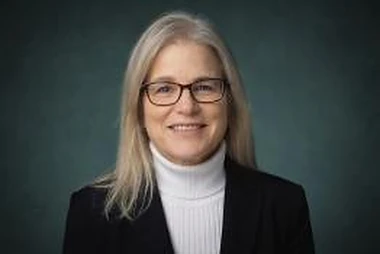
Studio headshot of Dr. Amy Taylor-Bianco in a white turtleneck and black blazer, against a dark teal background.

She can comment on leading organizational change, career reinvention, motivation and goal pursuit, gender and culture in founding teams, and leadership education.

Download the press kit

For interviews and comment, use the inquiry form.

Partner organizations

Alex’s Lemonade Stand FoundationCasey CaresTurn it GoldPassion Works